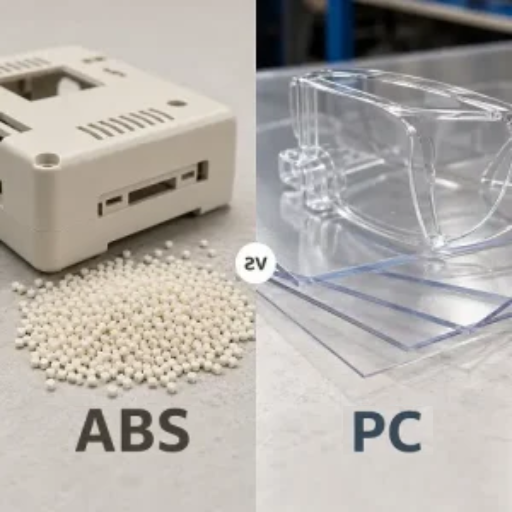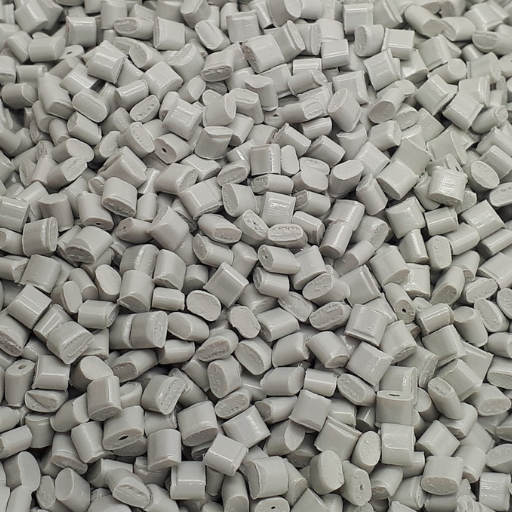
Dry polycarbonate pellets at 120 degrees Celsius (250 degrees Fahrenheit) for 3 to 4 hours in a desiccant dryer that delivers air at a dew point of minus 20 degrees Celsius or lower, until moisture measures below 0.02 percent. Extend to 4 to 6 hours for regrind or humid storage, and never exceed about 12 hours at temperature.
In July, Daniel was running clear polycarbonate covers for a lighting customer when the parts started coming off the press with silver streaks across the surface. Yield dropped from 96% to 71% in one shift.
The barrel temperatures were correct. The cycle was dialed in. The mold had run the same job cleanly three weeks earlier.
The resin was the problem. A moisture reading at the press showed 0.06%, three times the 0.02% limit polycarbonate allows. The dryer had been holding 120 degrees Celsius the whole time, but nobody had checked whether it still worked.
Polycarbonate is unforgiving about moisture. It absorbs water into the pellet, not just onto the surface, and at melt temperatures above 260 degrees Celsius that water attacks the polymer chain itself. You can’t re-dry a damaged pellet.
This guide covers how to dry polycarbonate pellets: the four numbers that matter, the dryer you need to hit them, and the verification step that catches a failed dryer before it costs you a shift. You’ll also get grade-specific adjustments, a troubleshooting table, and a setup card to post at the machine.
We are Suzhou Yifuhui New Material Co., Ltd., a supplier of engineering plastic pellets. We test moisture on every PC batch we ship, because we’ve seen what a failed dryer costs.
Why Polycarbonate Has to Be Dried
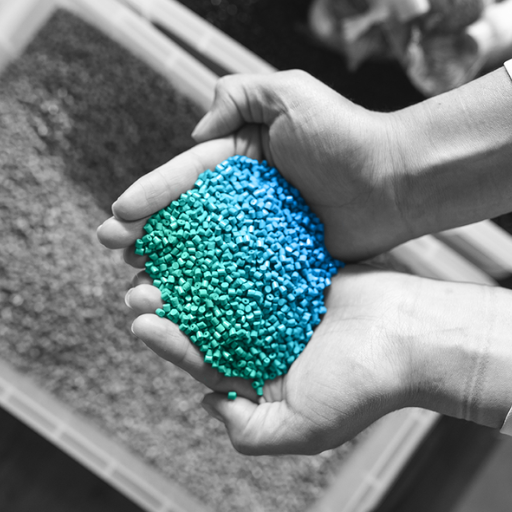
Polycarbonate is hygroscopic. It pulls water vapor out of ambient air and holds it inside the pellet. In a humid warehouse, PC settles at roughly 0.15% to 0.35% moisture by weight.
That sounds modest next to nylon, which absorbs 2% to 8%. The difference is tolerance. Polycarbonate’s processing window is tight. A normal amount of absorbed moisture is already too much, and above 0.02% (200 ppm) that water flashes to steam inside the melt.
The steam does two things. It leaves visible defects, and it drives hydrolysis, a chemical reaction that breaks polymer chains.
Chain scission cuts molecular weight, which cuts impact strength, elongation, and melt consistency. Those losses are permanent. Wet-molded parts are scrap, and degraded regrind shouldn’t go back into the hopper. Both Plastics Technology and Novatec document why hygroscopic resins can’t be dried with hot air alone.
That’s why drying polycarbonate pellets is a process step, not a formality.
For a wider look at where drying sits in a full process setup, see our polycarbonate pellets for injection molding guide.
How to Dry Polycarbonate Pellets: Parameters at a Glance
Here are the settings that cover most general-purpose PC grades. Confirm against your grade’s technical data sheet before you commit a production run.
| Parameter | Recommended Setting | Why It Matters |
|---|---|---|
| Drying temperature | 120°C (250°F) | Fast enough drying without thermal damage |
| Drying time | 3 to 4 hours | Reaches the moisture target on virgin pellet |
| Time with regrind | 4 to 6 hours | Regrind picks up moisture faster |
| Maximum time at temperature | About 12 hours | Beyond this, PC oxidizes and yellows |
| Dryer type | Desiccant (dehumidifying) | Hot air cannot dry PC |
| Process air dew point | −20°C or lower | Drives moisture out of the pellet |
| Target moisture before molding | Below 0.02% (200 ppm) | The specification that matters |
| Optical and medical grades | Often below 0.015% | Tighter window for clarity and purity |
Suppliers quote slightly different windows. The numbers depend on grade, additive package, regrind content, initial moisture, and dryer capability. That isn’t confusion, it’s specificity. Your grade’s datasheet governs.
Ready to skip the guesswork on incoming moisture? Browse our polycarbonate pellet grades and ask our engineers for the drying profile that matches your process.
What Temperature Do You Dry Polycarbonate At?
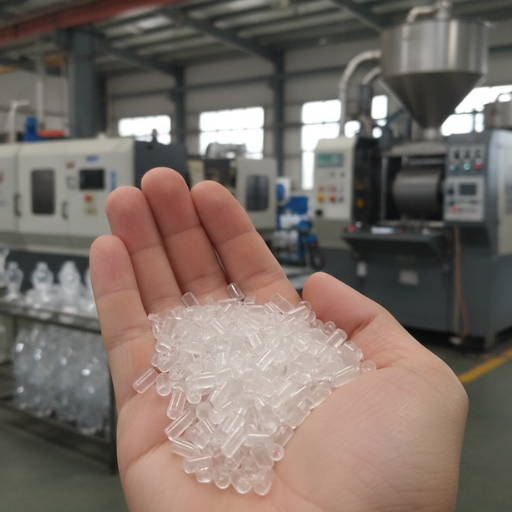
The polycarbonate drying temperature for standard grades is 120 degrees Celsius (250 degrees Fahrenheit). Modified grades, especially flame-retardant (FR) types, should stay at or below 120 degrees Celsius, and often at 110 degrees Celsius, to protect the additive package.
Temperature is the easy half of drying, and it’s also the half that gets people into trouble. Raising the setpoint feels like a fix for slow drying, but it causes damage that time can’t undo.
Above the recommended range, PC undergoes thermal oxidation. You get yellowing, loss of clarity, additive depletion, and higher melt flow. In an FR grade, the flame retardant itself degrades faster than the base resin.
Below the recommended range, the drying rate collapses. Polycarbonate holds moisture internally, and water has to diffuse out through the pellet. That diffusion is temperature-driven.
Set the hopper at 90 degrees Celsius and you may need twice the time to reach the same moisture. Or you never reach it at all.
| Grade | Temperature | Typical Time |
|---|---|---|
| General-purpose PC | 120°C (250°F) | 3 to 4 hours |
| Flame-retardant PC | 110 to 120°C | 3 to 4 hours |
| Glass-filled PC (GF20, GF30) | 120°C | 4 to 6 hours |
| PC/ABS blend | Follow the PC side | 3 to 4 hours |
| Optical and medical PC | 120°C | Per datasheet, verify moisture |
Glass-filled grades need the longer window because glass lowers thermal conductivity, so heat and water move through the pellet more slowly.
How Long Do You Dry Polycarbonate Pellets?
How long to dry polycarbonate depends on the pellet, not the calendar. Virgin pellet needs 3 to 4 hours at 120 degrees Celsius. Extend to 4 to 6 hours when the material contains regrind, arrived with higher moisture, or sat in a humid warehouse before you loaded it. Don’t exceed roughly 12 hours at temperature.
Regrind is the most common reason drying time stretches. Reground pellet has more surface area and a thermal history already behind it, so it absorbs moisture faster than virgin resin. Add 1 to 2 hours, and keep regrind content modest. Optical and medical jobs should run zero regrind.
One rule covers most of this: longer at the correct temperature is safer than hotter. If a run is short on time, extend the dry rather than dialing up the heat. Thermal damage is permanent and shows up as a color problem you can’t fix later.
Also size for residence. A hopper holding 3 to 4 hours of material means the pellets at the bottom have dried long enough by the time they reach the screw.
Take a shop running 25 kg of virgin PC in a humid plant. The 3-hour baseline plus a confirmed dew point is usually enough. An opened bag that sat on the floor for a week starts closer to 0.3% and needs the longer end of the range. Time-based drying without knowing starting moisture is guesswork with a clock.
Do You Need a Desiccant Dryer for Polycarbonate?
Yes. A standard hot-air or basic hopper dryer can’t dry polycarbonate to below 0.02%. Hot air only removes surface moisture, and PC’s problem isn’t on the surface. You need a desiccant (dehumidifying) dryer.
A desiccant dryer runs process air through a molecular sieve bed. The bed strips moisture out before the air reaches the hopper. Twin-tower designs dry the resin on one bed while regenerating the other, so the dryer keeps running. The result is process air with a low dew point, which is what actually pulls water out of the pellet.
Aim for a dew point of minus 20 degrees Celsius or lower. Many PC suppliers specify minus 40 degrees Celsius, which is the same number in Fahrenheit.
A lower dew point reaches your target moisture faster. The spec that matters is the moisture target, not the dew point itself. Dew point is a rate lever. BryAir explains the dew point side of this in more depth.
Three setup details decide whether the dryer performs.
- Seal the system. Air leaks at the hopper lid, the gasket, or a transfer line let humid room air back in.
- Insulate the hopper and lines. Warm, uninsulated transfer hoses let dried pellet reabsorb moisture on the way to the press.
- Watch return-air temperature. On high-temperature resins, hot air returning to the desiccant bed makes it ineffective. An after-cooler between the hopper and the dryer fixes this.
Vacuum dryers are the alternative. They reach dryness in 30 to 60 minutes instead of hours, which pays off in high-mix shops with fast changeovers. The tradeoff is capital cost.
If you are still deciding how you store material between deliveries, our guide to storing plastic resin pellets covers container and warehouse practice, and this article covers what happens at the machine.
Not sure your dryer is capable of the dew point PC needs? Contact our engineering team and we will review your setup against the grade you are running.
How Do You Know Polycarbonate Pellets Are Dry Enough?
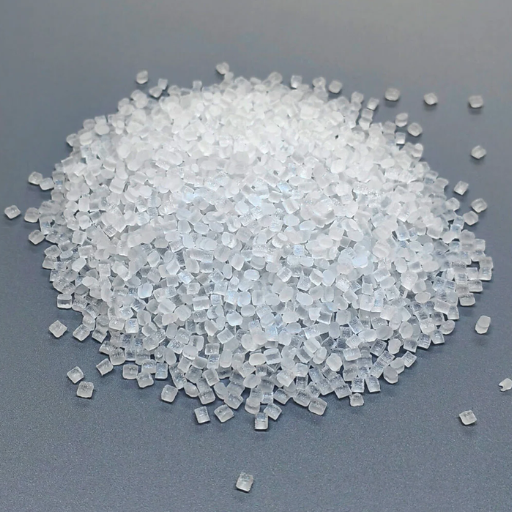
Measure it. A dryer setpoint tells you nothing about the resin that’s inside it.
The standard check is a moisture analyzer using Karl Fischer titration or a loss-on-drying method. Take the sample at the press hopper, not at the dryer outlet. Material can reabsorb moisture through an uninsulated transfer line. The dryer outlet reading can look fine while the press runs wet.
Target a polycarbonate moisture content below 0.02% for general-purpose grades. Optical and medical grades often run tighter, and disc-grade material can require closer to 100 ppm.
If you don’t have a moisture analyzer, use two substitutes. First, a dew point meter on the dryer. Readings above about minus 10 degrees Celsius mean saturated desiccant, which is the most common hidden failure.
Second, an air-shot or short-shot inspection before the production run. Watch for splay and steam at the nozzle.
Priya, a production planner at a shop running both PC and ABS, found this out the hard way. Her team loaded PC into a hopper right after an ABS job and kept the same setpoint, because the dryer looked fine.
The PC came out under-dried, with splay on every third part. The dryer hadn’t failed. The schedule had. The fix was two setpoints instead of one.
Then build the habit. Check dryer dew point weekly, treat readings above minus 10 degrees Celsius as an alarm, and inspect desiccant beads every 6 to 12 months.
For the incoming-inspection side of this, including how we test each batch, see our plastic pellet quality control guide.
What Happens If You Get It Wrong?
Drying errors show up in the part, and the fix depends on which error you’ve made. Use this table to work backward from the defect.
| Defect | Likely Drying Cause | Fix |
|---|---|---|
| Splay, silver streaks | Under-dried or wet resin | Verify dew point, extend dry time, re-measure moisture at the press |
| Surface haze or cloudiness | Under-dried resin, or cold mold | Confirm moisture below 0.02%, then check mold temperature |
| Bubbles or voids | Moisture, or excessive shear | Dry to spec; reduce injection speed and check residence time |
| Brittle parts, low impact | Hydrolysis from wet processing | Fix the drying protocol; check regrind quality and percentage |
| Yellowing, brown streaks | Over-drying or excessive thermal history | Lower the setpoint, cut time, purge the barrel |
| Black specks | Contamination or degradation | Clean the hopper and lines; check for material cross-over |
One caution. If splay continues after you’ve verified moisture, drying is no longer the suspect. Look at mold venting, injection speed and shear, residence time, contamination, and regrind quality.
In transparent PC the stakes are higher. Reported cases show visible silver streaks at moisture as low as 0.05%, well before mechanical properties suffer. If you mold clear parts, hold the tight end of the spec.
Can You Over-Dry Polycarbonate?
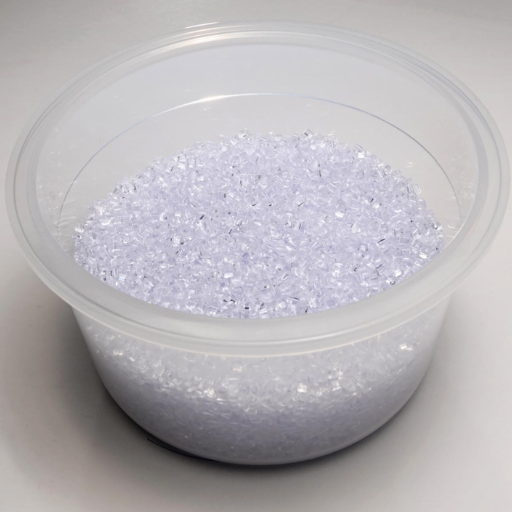
Yes. Over-drying polycarbonate past roughly 12 hours at temperature oxidizes it. You get yellowing, brittleness, gel formation, and loss of additives, and flame-retardant grades degrade faster than standard ones.
One shop learned this the expensive way. After a splay problem, the team set the PC hopper to run 16 hours overnight to be safe.
The next morning the parts were dry, and also yellow and brittle. The original problem was a dew point that never reached spec, not a shortage of time. More heat made a fresh defect on top of the old one.
Two habits prevent over-drying. Use temperature setback on stops longer than about 30 minutes. Most modern dryers support it, and it protects material sitting idle. After a stop longer than two hours, re-verify moisture before you restart.
And don’t confuse dried enough with dried as long as possible. The target is a moisture value, not a clock.
PC vs ABS Drying: What Changes?
The PC drying temperature sits at 120 degrees Celsius with a moisture target below 0.02%. ABS needs only 80 to 90 degrees Celsius and below 0.1%. Both need a desiccant dryer, and neither dries properly in hot air alone.
| Parameter | PC | PC/ABS Blend | ABS |
|---|---|---|---|
| Drying temperature | 120°C (250°F) | 110 to 120°C | 80 to 90°C |
| Drying time | 3 to 4 hours | 3 to 4 hours | 2 to 4 hours |
| Moisture target | Below 0.02% | Below 0.02% | Below 0.1% |
| Dryer type | Desiccant | Desiccant | Desiccant |
| Over-drying limit | About 12 hours | About 12 hours | Longer window |
The PC/ABS drying temperature follows the PC side of the table. Higher PC content pushes the settings closer to straight PC, so confirm against the grade datasheet rather than splitting the difference. For shops running both, the PC ABS drying temperature is the stricter of the two settings.
This matters most for scheduling. A shop running PC and ABS on the same shift needs two dryer setpoints and two moisture targets. One shared schedule produces defects that look mysterious until you check the log.
For the complete side-by-side on polycarbonate vs ABS properties and processing, start with the pillar guide. For the full processing comparison, including melt temperature, mold temperature, and pressure, see our PC vs ABS injection molding guide. If you are evaluating the blend, our PC/ABS blend pellets guide covers ratios and property tradeoffs.
Polycarbonate Drying Checklist
- Confirm the grade and read the datasheet drying recommendation.
- Select a desiccant dryer, not a hot-air hopper.
- Set 120°C (250°F) and 3 to 4 hours; extend to 4 to 6 hours for regrind.
- Verify dew point at minus 20°C or lower before loading material.
- Load the hopper and seal it, with insulated transfer lines to the press.
- Measure moisture at the press hopper and confirm below 0.02%.
- Hold setpoint until the run ends, then use temperature setback on any stop.
Polycarbonate Pellets FAQ
What temperature do you dry polycarbonate at?
120 degrees Celsius (250 degrees Fahrenheit) for standard grades. Flame-retardant grades stay at or below 120 degrees Celsius, often around 110 degrees Celsius, to protect the additive package.
How long do you dry polycarbonate pellets?
3 to 4 hours at 120 degrees Celsius for virgin pellet. Extend to 4 to 6 hours for regrind, high initial moisture, or humid storage, and never exceed about 12 hours.
What moisture content should polycarbonate be before molding?
Below 0.02% (200 ppm) for general-purpose grades. Optical, medical, and disc-grade material often runs tighter, in some cases down to about 100 ppm.
Can I dry polycarbonate in a regular hopper dryer?
No. Hot-air and basic hopper dryers only remove surface moisture, and polycarbonate holds water inside the pellet. Use a desiccant dryer with a dew point of minus 20 degrees Celsius or lower.
Can you over-dry polycarbonate?
Yes. Beyond roughly 12 hours at temperature, PC oxidizes and yellows, and flame-retardant grades degrade faster. Use temperature setback during stops.
What happens if you mold wet polycarbonate?
Moisture flashes to steam in the melt and drives hydrolysis, which permanently breaks polymer chains. You see splay, silver streaks, bubbles, and brittleness, and the mechanical loss can’t be recovered by re-drying.
Do you need to dry PC/ABS blend pellets?
Yes. Treat the blend like PC, with a moisture target below 0.02% and a desiccant dryer. Higher PC content means settings closer to straight PC.
How do you know polycarbonate pellets are dry?
Measure moisture at the press hopper with a Karl Fischer or loss-on-drying analyzer and confirm below 0.02%. A dew point meter on the dryer catches saturated desiccant, and an air-shot inspection is a fast shop-floor check.
Getting Polycarbonate Drying Right, Every Time
The protocol for how to dry polycarbonate pellets is short. Dry them at 120 degrees Celsius for 3 to 4 hours in a desiccant dryer at a dew point of minus 20 degrees Celsius or lower, until moisture measures below 0.02%.
Five things to carry into your next run:
- PC absorbs moisture into the pellet, so hot air won’t fix it.
- Below 0.02% is the specification that protects impact strength and clarity.
- Regrind, glass-filled grades, and FR grades each need a different adjustment.
- Measure at the press hopper, because the dryer outlet can read fine while the press runs wet.
- Over-drying damages PC just as surely as under-drying, so use setback on stops.
Daniel’s shop solved its splay problem in a day. It didn’t buy a new dryer. It replaced saturated desiccant, added a dew point meter, and started logging moisture at the press before every PC run. The 96% yield came back.
Polycarbonate pellets from Suzhou Yifuhui ship sealed in moisture-barrier packaging and batch tested with a certificate of analysis, so your material arrives closer to dry. Our engineering team helps match grade, dryer settings, and regrind policy to your process.
Request a quote for polycarbonate pellets and tell us the press and the part. We will come back with the drying profile that fits them.