Elena’s packaging company had a simple problem. A retail client wanted 500,000 takeaway containers in three months, and a new supplier offered p olypropylene pellets at a price 18% below market. The supplier said the resin was “food grade.” There was no certificate in the email, only a promise. Elena approved the order anyway.
Six weeks later, her client’s quality team audited the documentation and found no migration test reports and no compliance certificate. The entire lot was quarantined, the retail contract went on hold, and Elena spent the next month proving to a second supplier that the replacement resin met food-contact standards.
That scenario repeats across the industry every quarter. The problem is never a shortage of food grade plastic resin pellets. The problem is that “food grade” gets used loosely, and the cost of trusting the label instead of the evidence can be a stopped production line.
This guide gives you a complete framework for evaluating food grade plastic resin pellets before you buy. You’ll learn what actually makes a resin food safe, how the major resin families compare, which regulations apply to your market, and exactly what documentation to request from every supplier. If you also want the wider view of how these materials are made and bought, our Plastic Resin Pellets: The Complete Manufacturing and Procurement Guide pairs well with everything covered here. By the end, you can specify the right resin, verify the paperwork, and source with confidence.
Need a fast answer on a specific resin? Our materials engineers help buyers match food grade plastic resin pellets to their exact application and process. Request technical data for your project, and we respond within 24 hours.
What Are Food Grade Plastic Resin Pellets?
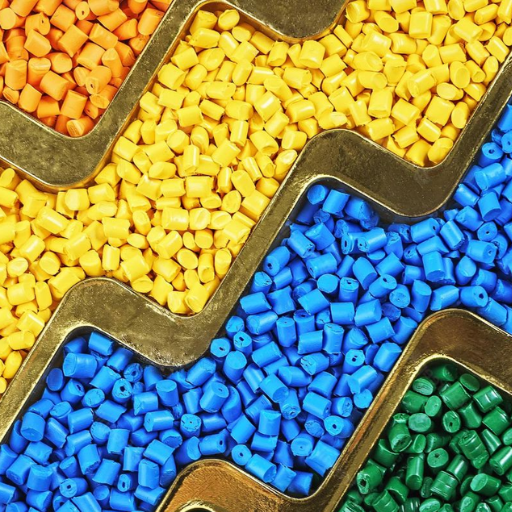
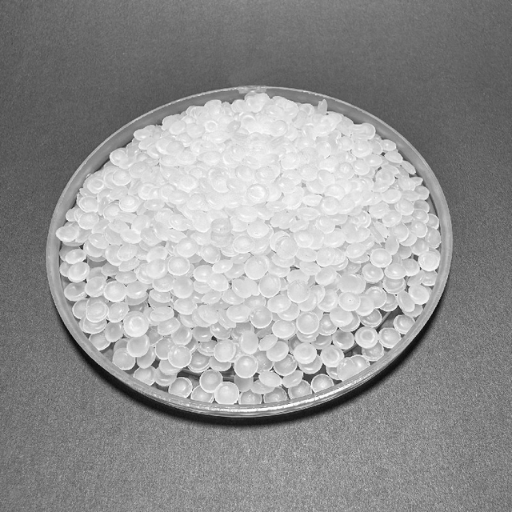
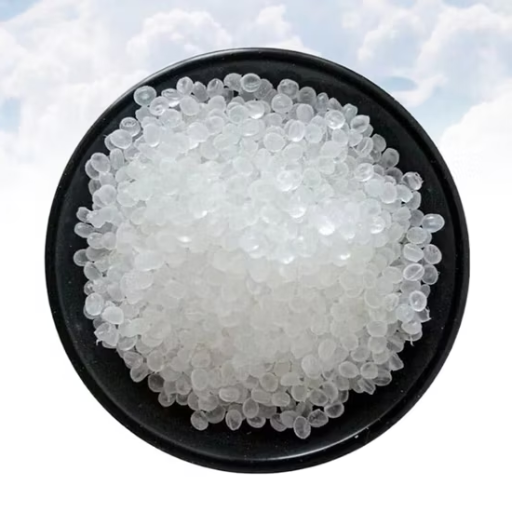
Food grade plastic resin pellets are polymer granules manufactured and certified to be safe for direct contact with food under defined conditions of use. They comply with food-contact regulations in their target market, are produced from approved raw materials and additives, and pass migration testing that proves no harmful substances transfer into food.
Three words in that definition matter more than the rest: certified, approved, and tested. A pellet is not food grade because a supplier says so. It is food grade because the resin recipe, the additives, and the finished part meet a documented regulatory standard, and because the supplier can show you the proof.
Food grade and food contact mean the same thing in practice. Both describe a material safe for touching food, whether directly, like a container wall, or indirectly, like packaging film. The term “food contact” is more precise in regulatory language, and you will see it in FDA and EU documents. In the market, “food grade” is the everyday term. This guide treats them as interchangeable.
The distinction that matters is between food grade and industrial grade. Industrial-grade pellets are formulated for performance, not safety. They may contain fillers, colorants, or additives that have no food-contact approval. Using industrial-grade resin for a food application is not a shortcut. It is a compliance risk that can trigger recalls and regulatory fines.
What Makes a Plastic Food Grade?
A resin qualifies as food grade when four conditions are met together.
- Approved base resin. The polymer itself appears on a regulatory positive list, such as FDA 21 CFR Part 177 or the EU positive list in Regulation (EU) 10/2011.
- Approved additives. Every additive, colorant, and processing aid falls within regulatory limits for food contact. Restricted substances like certain phthalates are excluded.
- Passed migration testing. The material is tested against food simulants under realistic conditions of time and temperature, and the migration results stay below the overall and specific migration limits.
- Documented compliance. The supplier provides a Certificate of Compliance (CoC) or Declaration of Conformity (DoC) that cites the applicable regulation and conditions of use.
If any one of these is missing, treat the “food grade” claim with suspicion. A supplier who cannot produce documentation for a food grade pellet is, in practice, selling you an industrial-grade pellet at a food-grade price.
The Main Food-Grade Resin Types
Every food-grade resin family earns its place through a different mix of properties. The table below summarizes the workhorses you will encounter when sourcing food grade plastic resin pellets.
| Resin | Code | Heat Limit | Clarity | Typical Uses | Key Regulation |
|---|---|---|---|---|---|
| PP (Polypropylene) | #5 | ~140°C | Translucent to clear | Takeaway trays, microwave containers, bottle caps, cutlery | FDA 21 CFR 177.1520 |
| HDPE (High-Density Polyethylene) | #2 | ~90–110°C | Opaque | Milk jugs, dairy bottles, juice containers, bottle caps | FDA 21 CFR 177.1520 |
| LDPE (Low-Density Polyethylene) | #4 | ~70–90°C | Clear, flexible | Cling film, bags, squeeze bottles, carton linings | FDA 21 CFR 177.1520 |
| PET / PETG | #1 | ~70°C (single use) | Crystal clear | Water and beverage bottles, clamshells, food trays | FDA 21 CFR 177.1630 |
| PMMA (Acrylic) | #7 (Other) | ~80°C | >92% transmission | Display cases, dinnerware, pastry boxes | FDA 21 CFR 177.1010 |
Read the sections below for the practical detail behind each row.
Polypropylene (PP): The Microwave-Safe Workhorse
Polypropylene is the most versatile food-grade resin for hot applications. Its melting point sits around 160–170°C, which means finished parts can handle boiling water and repeated microwave heating without warping. Clarified PP grades offer near-transparency for containers where you want to show the product, while standard grades keep costs down for utility items.
PP resists acids, alkalis, oils, and most food ingredients without degrading. That chemical resistance makes it the default choice for meal-prep containers, takeaway packaging, bottle caps, and cutlery. For microwaveable trays, PP is the resin nearly every converter reaches for first. It also runs cleanly through injection molding and thermoforming, which keeps cycle times and scrap rates low.
When to choose PP: You need heat resistance, microwave compatibility, or resistance to oils and sauces. Our polypropylene pellets guide covers grade selection in more depth.
HDPE: The Dairy and Beverage Standard
High-density polyethylene delivers strength, moisture resistance, and a low price per part. Its opaque appearance and stiff structure make it ideal for milk bottles, juice containers, and jugs that must survive drops and stacking. HDPE also resists acids and moisture, which is why it dominates dairy packaging.
The trade-off is temperature. HDPE is rated for about 90–110°C, so it is not for microwave heating or hot-fill lines. Recycled food-grade HDPE has matured quickly under FDA and EU scrutiny, making it a strong candidate for sustainable packaging programs. We break down the safety question in detail in our guide, is HDPE food safe.
When to choose HDPE: You need impact strength, moisture barrier, or cost efficiency, and your application stays below hot-fill temperatures.
LDPE: Flexible Films and Wraps
Low-density polyethylene is the resin behind cling film, produce bags, squeeze bottles, and the inner linings of cartons. Its long branched chains make it soft and flexible, which lets it form tight seals and drape over products. LDPE is food safe within its temperature range, roughly 70–90°C, so it is not suitable for microwave heating or contact with very hot liquids.
LDPE and its linear cousin LLDPE dominate flexible food packaging because they heat-seal easily and protect against moisture. For converters, the main decisions are film thickness, seal strength, and clarity, all of which depend on the specific grade.
When to choose LDPE: You are producing films, bags, or flexible packaging that stays at room or chilled temperatures.
PET and PETG: Clarity for Bottles and Trays
Polyethylene terephthalate sets the standard for clear food packaging. Bottle-grade PET delivers crystal clarity, good gas barrier, and light weight, which is why it carries nearly all bottled water and carbonated drinks. PETG, the glycol-modified version, adds toughness and easier processing for trays, clamshells, and display packaging.
PET is designed for single use. It withstands cold and ambient temperatures well, but it should not be reheated or reused, because heat above roughly 70°C can compromise the material. Recycled food-grade PET, or rPET, is the most established recycled resin for direct food contact, with approved decontamination processes in both FDA and EU markets.
When to choose PET or PETG: You need optical clarity, a barrier to oxygen and carbon dioxide, or a rigid tray that shows the product. Our PET pellets guide explains bottle and tray grades in detail.
Other Food-Grade Options to Know
Beyond the big four, several specialty resins earn food-contact approval for specific roles.
- PMMA (acrylic) offers more than 92% light transmission, which makes it a favorite for display cases, dinnerware, and pastry boxes where clarity drives sales.
- PCTG / Tritan copolyester combines clarity with dishwasher durability for reusable food and beverage containers.
- TPE (thermoplastic elastomer) provides the soft-touch grips and gaskets on bottle caps, lids, and food storage seals.
- PLA is a bio-based, compostable option for cold-serve items and short-shelf-life packaging, where heat resistance is not required.
These materials fill niche roles, but PP, HDPE, LDPE, and PET will cover the majority of your food-contact needs.
Food-Grade Regulations and Standards Explained
Regulatory citations look intimidating until you understand the structure. Each market keeps a list of approved substances, a set of migration limits, and a process for proving compliance. Learn the shape of each system, and you can read any supplier’s certificate with confidence.
U.S. FDA (21 CFR Part 177)
The U.S. Food and Drug Administration publishes its food-contact regulations in Title 21 of the Code of Federal Regulations. Part 177 lists polymers approved for food contact, and each resin family has its own section. Polyolefins like PP, HDPE, and LDPE fall under 21 CFR 177.1520. PET and PETG fall under 21 CFR 177.1630. Part 178 covers the additives and production aids permitted in food-contact articles.
When a supplier says “FDA approved,” ask for the specific CFR section and the conditions of use. Approval is tied to temperature, food type, and contact duration. A resin approved for cold-fill contact is not automatically approved for hot-fill or repeated use. Read 21 CFR Part 177 on the eCFR portal to verify citations yourself.
European Union (Regulation (EU) 10/2011)
The EU builds its system on three regulations. Framework Regulation (EC) 1935/2004 covers all food-contact materials. Regulation (EU) 10/2011 is the Plastics Implementation Measure, and it contains the positive list of approved monomers and additives plus the migration test conditions. Regulation (EC) 2023/2006 sets Good Manufacturing Practice requirements for food-contact production.
The EU is generally stricter than the FDA on recycled materials. The European Food Safety Authority evaluates recycling processes through challenge testing, and only approved processes can produce recycled resin for direct food contact. As a result, EU buyers tend to request more documentation, and suppliers serving both markets must maintain parallel compliance files. See the European Commission’s food contact materials page for the current requirements.
China GB 9685 and Other Regional Standards
China regulates food-contact materials under GB standards, with GB 9685 covering additives and the GB 4806 series covering base resins and finished articles. Exporting food packaging to China requires compliance with these standards, which differ in structure from FDA and EU rules but follow the same logic of approved substances and migration limits.
Two other standards appear frequently in supplier documents. NSF/ANSI 51 covers food equipment materials, requiring formulation review, laboratory testing, and an annual audit of the manufacturing site. It matters if your parts touch food in commercial kitchens. California Proposition 65 applies in the U.S. state and requires disclosure of listed chemicals, so many brands request Prop 65 compliance statements even for national distribution.
How to Choose the Right Food-Grade Resin for Your Application
Marcus manages product development at a meal-prep company that ships 40,000 microwaveable trays a week. When he evaluated resin options, he started with the end-use conditions instead of the material spec. That sequence, application first and resin second, is the right way to approach every food-contact project.
Work through the decision framework in this order.
- Define the thermal exposure. Will the part meet boiling water, a microwave, a hot-fill line, or only cold storage? This one question eliminates most of the wrong materials immediately.
- Define the food type. Fatty, acidic, oily, and alcoholic foods all have different migration testing requirements. Choose a resin whose approval covers your food simulants.
- Define the contact time. Single use versus repeated use changes both the regulation and the grade you should specify.
- Define the processing method. Injection molding, blow molding, and extrusion each need a grade tuned for the right melt flow and fill behavior.
- Define the appearance. Clarity, color, and surface finish determine whether you use a clarified PP, a standard PP, or a PET/PETG grade.
Applied to Marcus’s tray, the framework is fast. Microwave heating plus oil contact plus injection molding points to clarified PP with a food-contact approval for high-temperature use. HDPE would fail the microwave test, PET would fail the heat test, and LDPE would lack the rigidity. One resin family survives all four constraints.
That kind of structured elimination is what separates a confident specification from a guess. If your requirements map to more than one resin, compare cost per part, processing behavior, and supply availability before you decide. Our guide to plastic pellets for injection molding walks through grade matching for molding projects.
Comparing grades for a specific product? Send your application details to our engineering team. We will recommend the resin family, the exact grade, and the compliance documentation you should request. Start the conversation here.
How to Verify Food-Grade Compliance: A Procurement Checklist
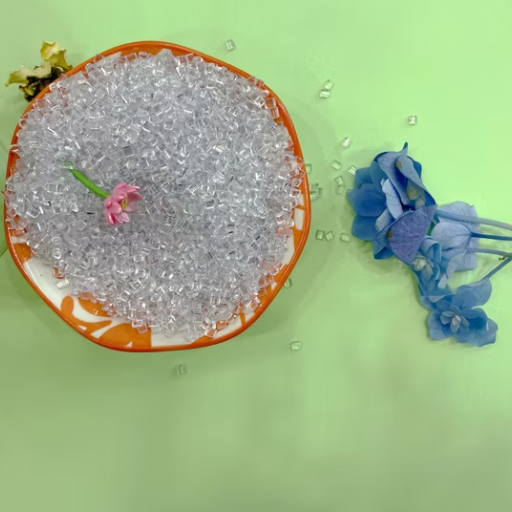
Documentation is the difference between a food grade pellet and a claim. When you evaluate a supplier, request these items and check them against your application.
- Certificate of Compliance (CoC) or Declaration of Conformity (DoC). The document must cite the specific regulation, such as FDA 21 CFR 177.1520 or EU 10/2011, and name the resin and grade.
- Migration test report. Ask for results against the food simulants that match your product, tested at your intended temperature and contact time.
- Additive compliance list. Confirm every additive and colorant is on the approved positive list for your target market.
- Certificate of Analysis (CoA). This shows batch-level quality data like melt flow index, density, and moisture, proving lot-to-lot consistency.
- Conditions of use statement. The approval should state the temperature range and food types the grade covers, so you can confirm your application fits.
- Batch traceability. The supplier should be able to trace any shipment back to the production run and its test results.
- Market-specific certifications. Add FDA or EU citations, China GB 9685 compliance, NSF/ANSI 51 where relevant, and California Proposition 65 statements as your market requires.
Watch for these red flags during the review. A supplier who can’t produce a CoC, who cites a regulation without a section number, who offers migration data for the wrong food simulants, or who describes the resin as “basically food grade” is telling you something important. Also beware of a single certificate covering every grade and every market. Compliance is specific, and one blanket document usually means none of it was verified for your use case.
Want a ready-to-use version of this checklist? Save the list above and run it on your next supplier call. For a deeper look at the test methods and batch checks behind these documents, our Plastic Pellet Quality Control: A Buyer’s Testing & Batch Verification Guide walks through the full process step by step. It takes ten minutes and prevents a quarantine that takes weeks to resolve.
Food-Grade Virgin vs. Recycled Resin
Virgin and recycled food-grade resins each have a role, and the choice is not about which is “better.” It is about which fits your regulatory, performance, and sustainability requirements.
Virgin resin is the safest default. Because the polymer is produced directly from monomers, the composition is fully known and the compliance path is straightforward. Choose virgin resin for hot-fill applications, long shelf life, strict migration requirements, or any case where you cannot tolerate variability.
Approved recycled resin works when the process is validated and the market accepts it. rPET is the most mature, with approved decontamination processes under both FDA and EFSA. Recycled food-grade HDPE and PP are growing quickly as brand owners chase recycled-content mandates. In 2026, the EU’s packaging rules are pushing more converters toward approved recycled grades, and the food-grade recycled resin market is projected to grow around 12% annually as a result.
The key difference from virgin is the compliance mechanism. Recycled resin is approved process by process, not resin by resin. The supplier must prove the decontamination step removes contaminants reliably, which means more documentation and more scrutiny. That is manageable, but it changes how you evaluate the supplier. For a deeper treatment of the regulatory paths, prices, and verification steps, read our dedicated guide to food-grade recycled plastic pellets.
Where to Source Food-Grade Resin Pellets
The market for food-grade packaging is expanding fast. The broader food-grade plastics market is growing at double-digit rates, with packaging as the largest application segment at roughly 60% of demand and food and beverage as the dominant end-use at about 65%. North America holds the largest regional share, while Europe is growing the fastest as sustainability rules tighten. All of that demand flows through suppliers like the one you are evaluating.
A reliable supplier of food grade plastic resin pellets provides four things beyond the resin itself.
- Documentation on request. CoC, migration reports, CoA, and market certifications, delivered without friction.
- Consistent batch quality. Test data that shows melt flow, density, and moisture within spec from lot to lot.
- Technical support. An engineer who can recommend the right grade for your application and processing method.
- A dependable supply chain. Stock availability and on-time delivery so your production line never waits on material.
That last point matters more than it appears. Resin shortages and shipping delays shut down production lines, and a supply disruption in a food-contact line is doubly painful because requalifying a substitute resin takes time. Working with a partner who treats your schedule like their own keeps your line moving. Because resin costs move with feedstock and demand, it also pays to benchmark quotes against current market rates; our Plastic Resin Pellets Price: 2026 Cost Benchmarks & Guide helps you judge whether a supplier’s number is fair before you commit.
Ready to evaluate us? Contact our team with your application and volume. We supply food-grade PP, HDPE, LDPE, PET, and specialty grades, ship documentation with every lot, and respond to all inquiries within 24 hours. Request a quote.
Food Grade Plastic Resin Pellets: FAQs
Is food grade plastic BPA free?
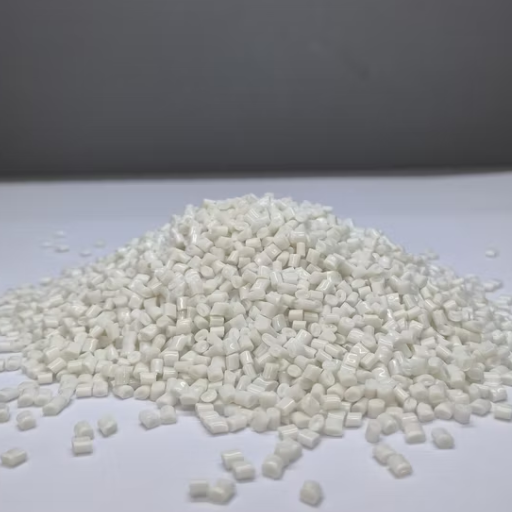
Food grade plastic resin pellets are BPA free when the specific grade contains no BPA, which is true for PP, HDPE, LDPE, and PET. BPA is associated with polycarbonate, not the polyolefin workhorses. Confirm the additive list on the grade’s certificate to be sure.
Is PP microwave safe?
Yes. Polypropylene is rated for temperatures up to roughly 140°C, so PP containers and trays can be microwaved for food heating. Always follow the container manufacturer’s guidance, because lids and components may use different materials.
Which plastic is safest for food containers?
For repeated use and hot food, PP is the most common choice because of its heat resistance and chemical stability. For single-use bottles and clear packaging, PET is the standard. Both are FDA and EU approved when sourced as food-grade resin.
Can recycled plastic pellets be used for food?
Yes, when the recycling process is regulator-approved and the supplier provides the supporting documentation. rPET is the most established, followed by food-grade recycled HDPE and PP. Without process approval and paperwork, recycled pellets are not food grade.
How do I know if a resin is FDA approved?
Ask the supplier for the Certificate of Compliance and the specific CFR section, such as FDA 21 CFR 177.1520 for polyolefins or 21 CFR 177.1630 for PET. Then verify the conditions of use match your application, including temperature, food type, and contact time.
What is the difference between food grade and food contact?
The two terms describe the same thing. “Food contact” is the precise regulatory language used in FDA and EU documents, while “food grade” is the everyday market term. Both mean the material is certified safe for contact with food.
Conclusion
Sourcing food grade plastic resin pellets doesn’t have to be a gamble. The materials are well understood, the regulations are public, and the documentation is standard. The risk in this market comes from skipping verification, not from a shortage of good resin.
Keep these takeaways with you on your next sourcing decision.
- Food grade is a system of approved resin, approved additives, migration testing, and documentation, not a marketing label.
- PP, HDPE, LDPE, and PET cover most food-contact needs. Choose based on temperature, food type, and processing method.
- Learn the regulatory language, FDA 21 CFR Part 177, EU 10/2011, and GB 9685, so you can read any certificate.
- Demand the full documentation set, CoC, migration report, CoA, and traceability, before you place an order.
- Virgin and approved recycled resin both have a place, as long as the process is validated and documented.
Your next step is a simple one. Define your application, gather the documentation checklist from this guide, and talk to a supplier who can answer every question on it. When you are ready, our materials engineers will help you match the right food grade plastic resin pellets to your product, with technical data and compliance documents on hand. Contact us today, and we will respond within 24 hours.